
There’s a rule of multithreaded programming that says that if something can happen, it will. Package delivered at the same time the kitchen catches on fire and ALF is on live TV? For sure. I’ve been in countless debugging sessions where things that “can’t” happen absolutely, 100% happen.

Users are clever
Users are the same way. They may not all be tech savvy, but they’re incredibly creative. As with most things in my career, I first really learned this in the early 90s on the Microsoft Works team.
Works included simple desktop publishing features for making newsletters, invitations, posters, that kind of thing. Our customer service team sent us a case they were stuck on — the app would no longer let a user add content to their newsletter. It was a simple one-page document: header, footer, a few columns of content, maybe an image or two. That’s it. They tried saving a copy and using the new file, but no luck. They really didn’t want to start from scratch (I think they’d inherited the document from their predecessor).

The aha moment finally came when the rep asked the user to describe every action they were taking. Take last month’s article content, drag it off the page, add a new …. wait, what?
It turns out that this user didn’t know how to “delete” content blocks. But they realized that objects outside of the page boundaries on screen didn’t print — so each month they would just drag the old content blocks off the page and add new ones. Genius!
Except of course, the file got bigger and bigger and slower and slower until it just broke. I don’t remember if it was a memory problem, or if there were limits on the number of objects in a file, or what — but either way, a little education on “delete” and the newsletter was back in business.
We never expected users to be confused about deleting things. We never expected them to consider the off-the-page area as part of the real working space. More subtly, we’d never thought much at all about “periodicals” that used the same template time after time. And all of that’s on us — the user just found a creative way to do what they needed to do.
Whose car is it anyway?
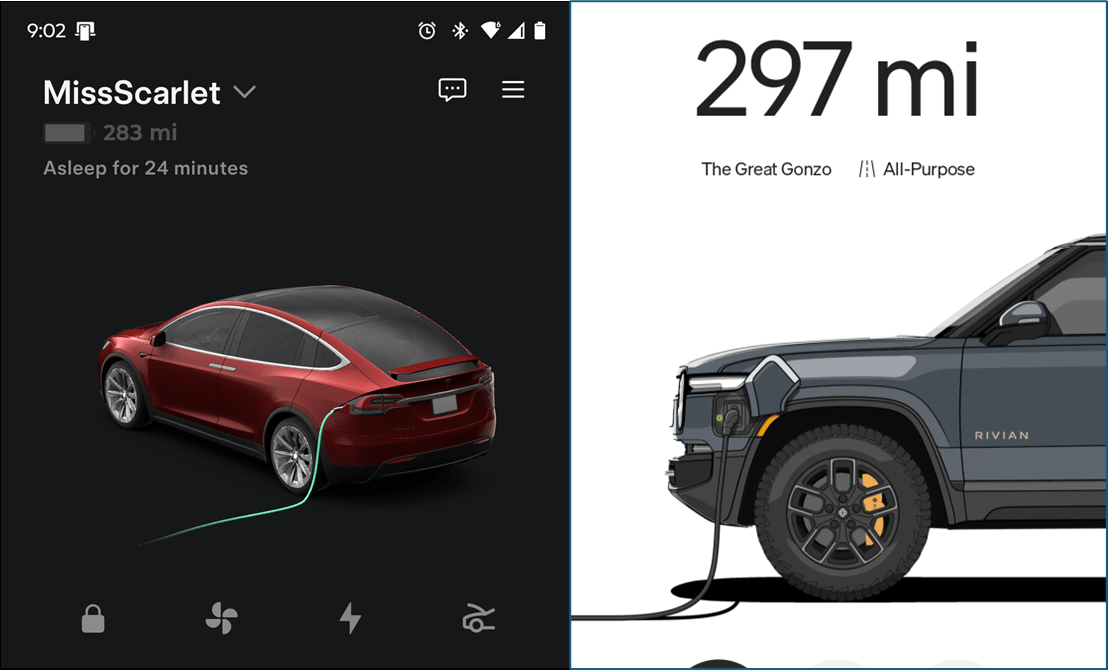
A couple of weeks ago we traded in our Tesla Model X for a Rivian R1S. If you know me you know how conflicted and sad I am about Elon (see here, here and here), but that’s a story for another day. We’ll take the Rivian on its first Cali road trip soon, and I’ll write up a comparison then. Stay tuned.
Before we traded in the Tesla, I logged us out of all the various accounts that we’d set up on the vehicle. At the Rivian service center we signed over the title, handed them the key fobs, and waved goodbye to “Miss Scarlet” as we drove our new car home. Done and dusted!
Later that day I got a phone notification that the Tesla doors were unlocked. When I opened the app it turned out that I was still fully in control of the car. Huh. I honked the horn a few times for fun and then moved on with my afternoon.
Now this isn’t really all that surprising — of course Tesla didn’t know we’d sold the car; that’s not how it “works” in the industry. But it’s an interesting edge case, and one I thought about frequently over the course of the next week as Miss Scarlet made its way through the resale process. I didn’t snap pictures of the car sitting at the Bellevue service center, but once it moved down to Kent I thought it’d be fun to keep a record.
First stop, Manheim Seattle Auto Auction. The Manheim facility is pretty huge; the car started in the middle of a huge lot, then next to a little outbuilding. It then appeared to move into a garage — probably for detailing — before bouncing from spot to spot in the lot again.

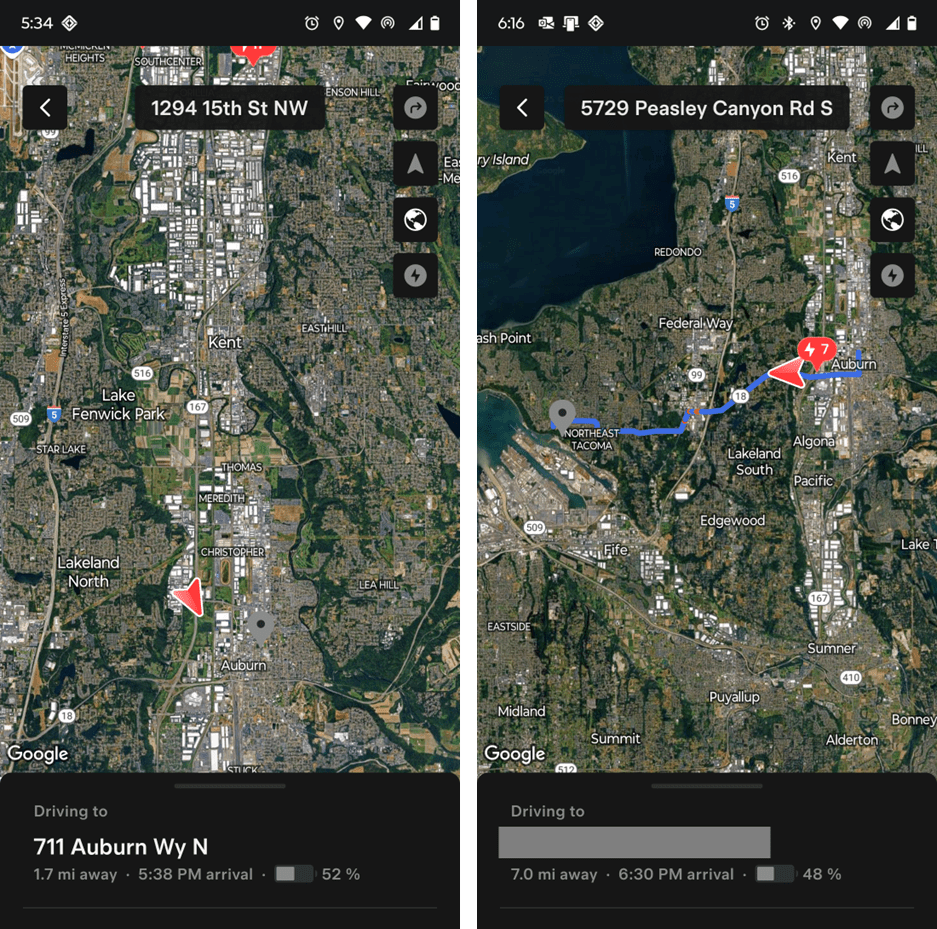
After a few days I got a navigation alert and found the car driving on its merry way to Worldwide Auto Group in Auburn. Two days later another alert and it was en route to a private home in Tacoma. I’ve masked out the address on that one because I’m assuming it’s an actual person who bought the car.
FINALLY, after eight days, a notification popped up on Lara’s phone that Worldwide was asking to take “ownership” of the Tesla — we agreed and and off she went into the sunset, leaving the Ventura Powerwall as the only Tesla product in our world.
What to make of this? Certainly I wasn’t “intended” to retain control of the car after I no longer owned it — but did it really matter? I think so — during this period I could see exactly where the car was, lock and unlock it, remote start, summon it if I was anywhere near by, and quite a bit more. It seems like bad guys have managed some pretty nasty stuff given a lot less access.
It’s always the edges
As someone who built their career around the craft of software engineering, it’s tough to get old and watch crappy AI and copy/paste code take over more and more of the world. Don’t get me wrong, it’s happening because mostly it does the job, and usually cheaper. But that doesn’t mean I need to like it.
Still, at least for now, the game is still on. Designing for the unexpected and the edges and future still matters, and those aren’t, so far, things the machines do well. Sometimes it’s an issue of technology and errors and such; more often it’s about user interaction. Don’t write us off quite yet!